 Site Administrator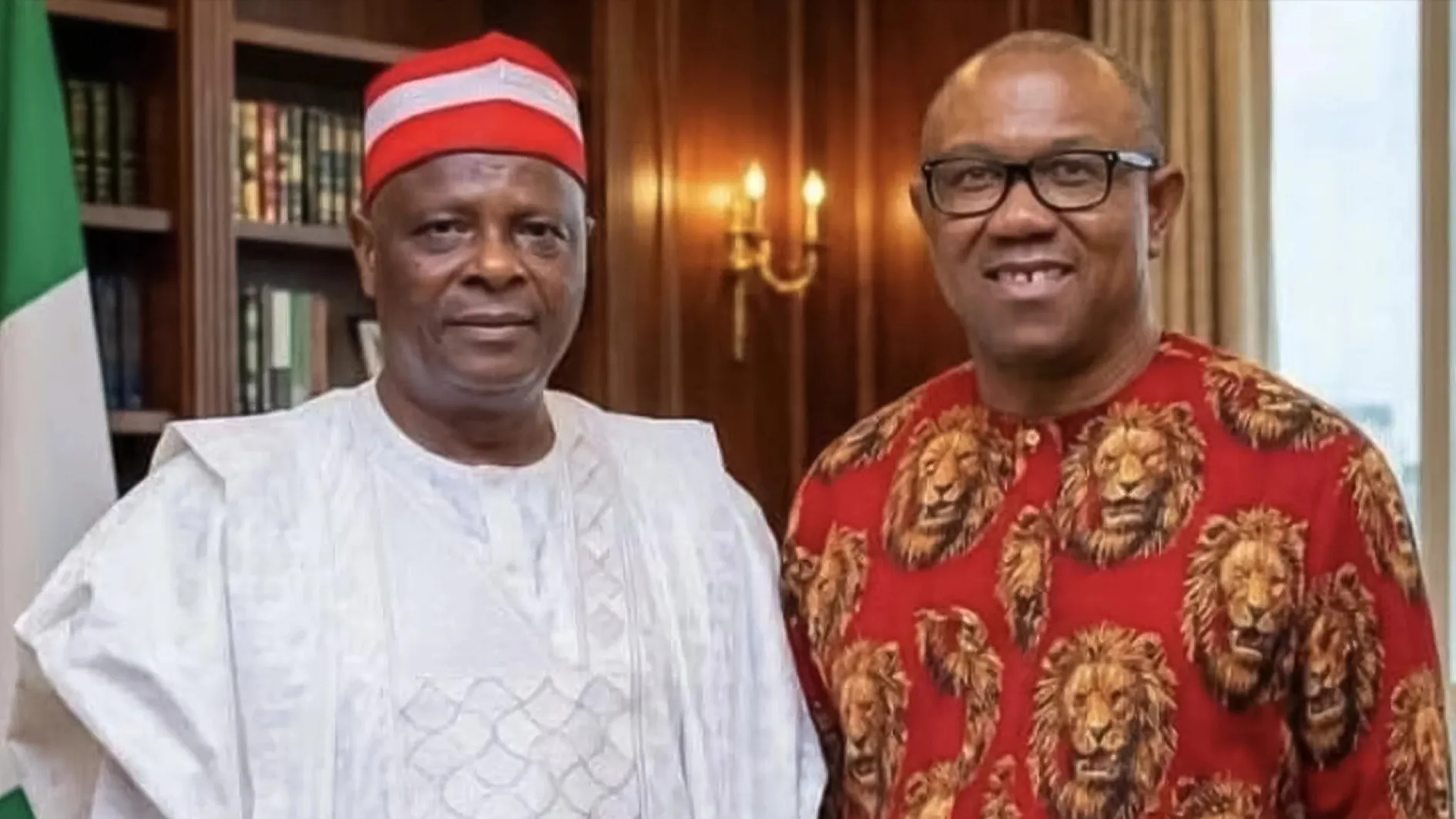
Obi Pledges Equal Partnership with Running Mate Kwankwaso for 2027 Polls
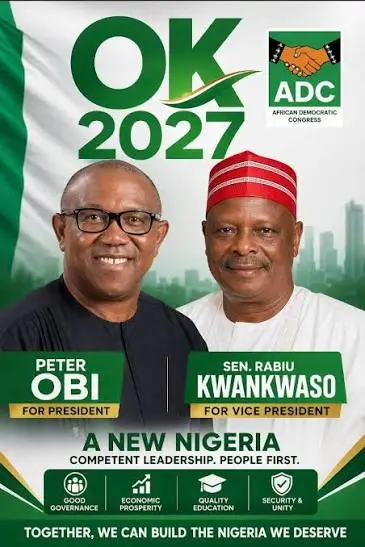
Peter Obi, the presidential flagbearer for the Nigeria Democratic Congress (NDC), has assured Nigerians that his running mate, Rabiu Kwankwaso, will act as a co-pilot rather than a "spare tyre" if they win the 2027 presidential election.
The former Anambra State governor made this declaration during the NDC’s national convention in Abuja, shortly after securing the party's presidential ticket and officially naming Kwankwaso as his vice-presidential candidate.
In Nigerian political discourse, the term "spare tyre" is commonly used to describe deputy governors and vice presidents whose roles are strictly ceremonial, stepping into power only when the principal is absent, incapacitated, or deceased.
Obi emphasized that his administration would break away from this tradition, prioritizing a collaborative governance model to drive national progress.
"The administration we plan to establish will move past the era where the vice president is treated like a spare tyre," Obi stated. "Our vice president will be a true partner. We aim to build a nation guided by two equals working collectively for the country's advancement."
He added that all major policy decisions would involve mutual consultation, describing this collaborative approach as essential for effective governance.
A Familiar Promise of Shared Power
This collaborative governance strategy echoes a similar pledge made before the 2023 elections by Vice President Kashim Shettima, who was then the running mate for the All Progressives Congress (APC).
At the time, Shettima suggested a division of labor between himself and Bola Tinubu, proposing that while Tinubu focused on economic reforms, he would personally oversee national security due to his extensive experience in conflict zones.
Key Pillars of Peter Obi’s Blueprint for Nigeria
During his address at the convention, Obi outlined his vision for tackling Nigeria's most pressing challenges:
1. Combating National Insecurity
Obi lamented that despite Nigeria's reputation as a reliable international peacekeeper, the nation remains severely plagued by domestic terrorism. He promised an urgent, multi-faceted approach to restoring safety.
- Strategy: Implementing proactive, intelligence-driven, and technology-backed security measures.
- Root Causes: Addressing underlying triggers of crime, including poverty, unemployment, and social marginalization.
- Support: Strengthening security institutions and improving coordination and support for frontline personnel.
2. National Unity and Cohesion
The NDC candidate emphasized that national development is impossible without healing ethnic, political, and religious fractures. He called for a collective national identity, urging citizens to build bridges and foster mutual trust rather than division.
3. Healthcare Sector Reforms
Obi criticized the current state of Nigeria's primary healthcare, linking its deficiencies to rising infant mortality rates. He pointed out that Nigeria's health insurance coverage stands at a dismal 10%, compared to nations like Indonesia which exceed 90%.
His Healthcare Targets Include:
- Boosting the healthcare budget to at least 10% of the GDP (up from the current sub-5% allocation).
- Ensuring adequate staffing across medical facilities.
- Establishing fully operational and properly managed primary healthcare centers in all 8,809 wards nationwide within four years.
4. Educational Transformation
Viewing education as a primary driver of societal change, Obi promised substantial investments in schools, teacher training, modern technology, and vocational programs. The goal, he stated, is to equip young Nigerians to become job creators rather than just job seekers.
Additional Focus Areas
Beyond these core pillars, Obi identified anti-corruption initiatives, energy sector development, job creation, food security, and agricultural advancement as critical priorities for his proposed administration.
0 Comments
No comments yet. Be first!
Leave a Comment